
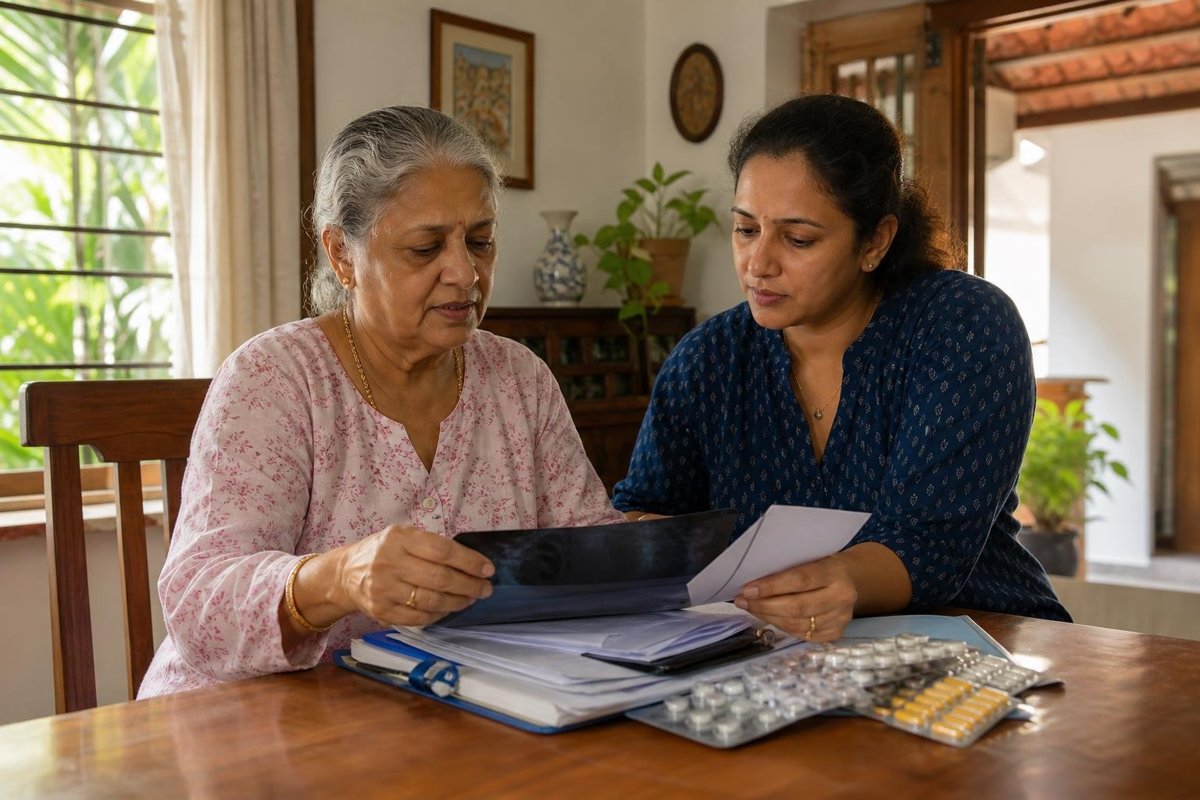
Quick answer: For your first visit to an orthopaedic doctor, carry any old X-rays, MRI reports and prescriptions, a list of your current medicines, and a short note of when the pain started and what makes it worse. Wear loose clothes so the painful joint can be examined easily. If possible, bring a family member who can help you remember what the doctor says.
It is 9 in the morning in Margao. Mrs. Fernandes has a plastic bag on her lap stuffed with papers: three old X-ray films, a blood report from 2019, half a strip of painkillers and a prescription from a doctor in Ponda that she can no longer read.
“I didn’t know what to bring,” she says. “So I brought everything.”
Honestly, that is better than bringing nothing. But a little planning makes your first orthopaedic consultation far more useful, for you and for the doctor. Here is what we suggest to every new patient, whether you are coming from Navelim, Curchorem, Quepem or across the river.
Which documents should you carry?
Start with anything related to the problem joint or bone. Old imaging is gold. A comparison between last year’s knee X-ray and today’s can tell the doctor a lot about how fast arthritis is changing.
- X-ray films or CDs, and the written reports for them
- MRI or CT scan reports (the CD too, if you have it)
- Discharge summaries from any previous surgery, especially joint or spine operations
- Recent blood tests, particularly sugar and kidney function if you are diabetic
Put them in date order. Five minutes at home saves fifteen in the clinic.
Why does your medicine list matter so much?
Because many common medicines change orthopaedic decisions. Blood thinners affect injections and surgery. Steroids can affect bones. Some diabetes and blood pressure tablets need adjusting before any procedure.
Write down every medicine you take, the dose, and how often. Include ayurvedic preparations, homeopathy and the calcium tablet your daughter brought from the chemist. People forget these all the time, and we would rather know.
If you are not sure of the names, simply bring the strips or bottles.
How should you describe your pain?
This is where most consultations either go very well or wander about. The doctor is trying to build a picture, and you are the only one who has lived inside that joint.
Before the visit, jot down short answers to these questions:
- When did it start? Was there a fall, a twist or a sports injury, or did it come on slowly?
- Where exactly does it hurt? Point with one finger if you can.
- What makes it worse: stairs, sitting cross-legged on the floor, getting up from a chair, kneeling at church or temple?
- Is it worse in the morning, at night, or after walking to the market?
- Have you noticed swelling, locking, giving way or numbness?
- What have you already tried, and did it help?
Rate the pain from 0 to 10 on a typical day and on a bad day. It sounds simple. It is very useful.
What should you wear?
Something loose. For knee problems, shorts or a wide salwar that can be rolled up above the knee work well. For shoulder or neck problems, a top that opens at the front or a loose t-shirt is ideal.
Wear the footwear you use every day. Your chappals can actually tell a doctor something about how you walk.
And in October heat or the August rains, carry a small towel. Nobody enjoys being examined while soaked.
What happens during the examination?
Expect questions first, then a physical examination. The doctor may watch you walk, ask you to squat or lift your arm, press gently around the joint and test its movement and stability. Sometimes the problem in the knee actually comes from the hip or the back, so do not be surprised if the doctor checks areas you did not mention.
Depending on what is found, you may be sent for an X-ray, blood test or MRI. Many problems are managed without surgery at all, with exercises, weight management, medicines or physiotherapy. If you are wondering whether your symptoms are serious enough for a visit in the first place, our article on signs you should not ignore may help.
Should you bring a family member?
We think yes, especially for older parents.
Medical conversations can feel rushed, and it is easy to forget half of what was said by the time you reach the car park. A son, daughter or spouse can take notes, ask the questions you were too shy to ask, and help with exercises at home later. If surgery like a knee replacement is being discussed, family will be part of the recovery anyway, so it helps if they hear the plan first-hand. You can read more about that kind of treatment on our hip and knee joint replacement page.
Which questions should you ask before you leave?
Do not leave without understanding three things: what the likely diagnosis is, what the treatment plan is, and what warning signs should bring you back sooner. Beyond that, ask anything. Is this exercise safe? Can I still go for my evening walk on the beach? How long before I see improvement?
A good orthopaedic doctor will not mind. If you want more on picking the right specialist, see our guide on choosing a reliable orthopaedic doctor in Goa, or browse our services.
Frequently Asked Questions
Do I need a referral to see an orthopaedic doctor?
Usually not. You can book directly, though a note from your family doctor is helpful if you have one.
Should I stop my painkillers before the visit?
No, do not stop any prescribed medicine on your own. Just note what you are taking and how much it helps.
What if I have lost my old X-rays?
That is fine. Bring whatever reports you still have. The doctor will order fresh imaging if it is needed.
Will I definitely need surgery?
Not necessarily. Many bone and joint problems improve with non-surgical care. Surgery is discussed only when it is likely to help more than other options.
How long does a first consultation take?
It varies with the problem, so keep some extra time free in case tests are advised on the same day.
When you are ready, you can contact us to fix your first appointment, and do bring that bag of papers along.
If you are searching for a Knee Replacement Surgeon in Mohali, then click here